

Large diameter two-way pressure butterfly valve is a top mounted metal hard seal butterfly valve with convenient installation and online maintenance. When the valve needs to be repaired, it is not necessary to remove it from the pipeline. As long as the upper cover is opened, the valve stem and butterfly plate can be taken out from the body cavity for maintenance, which makes the maintenance more simple and convenient. At present, the hard seal butterfly valves produced at home and abroad are butterfly plate side mounted; Once a fault occurs in the use process, it needs to be repaired; The medium in the pipeline must be closed, and the whole valve can be repaired only after it is removed from the pipeline. The maintenance is difficult and takes a long time, and affects the normal operation of the pipeline system; Therefore, the professional design and development of top mounted metal hard seal butterfly valve can easily disassemble the valve body, butterfly plate, elastic movement compensation valve seat, valve rod and composite multi-layer elastic sealing ring when installed on the pipeline.
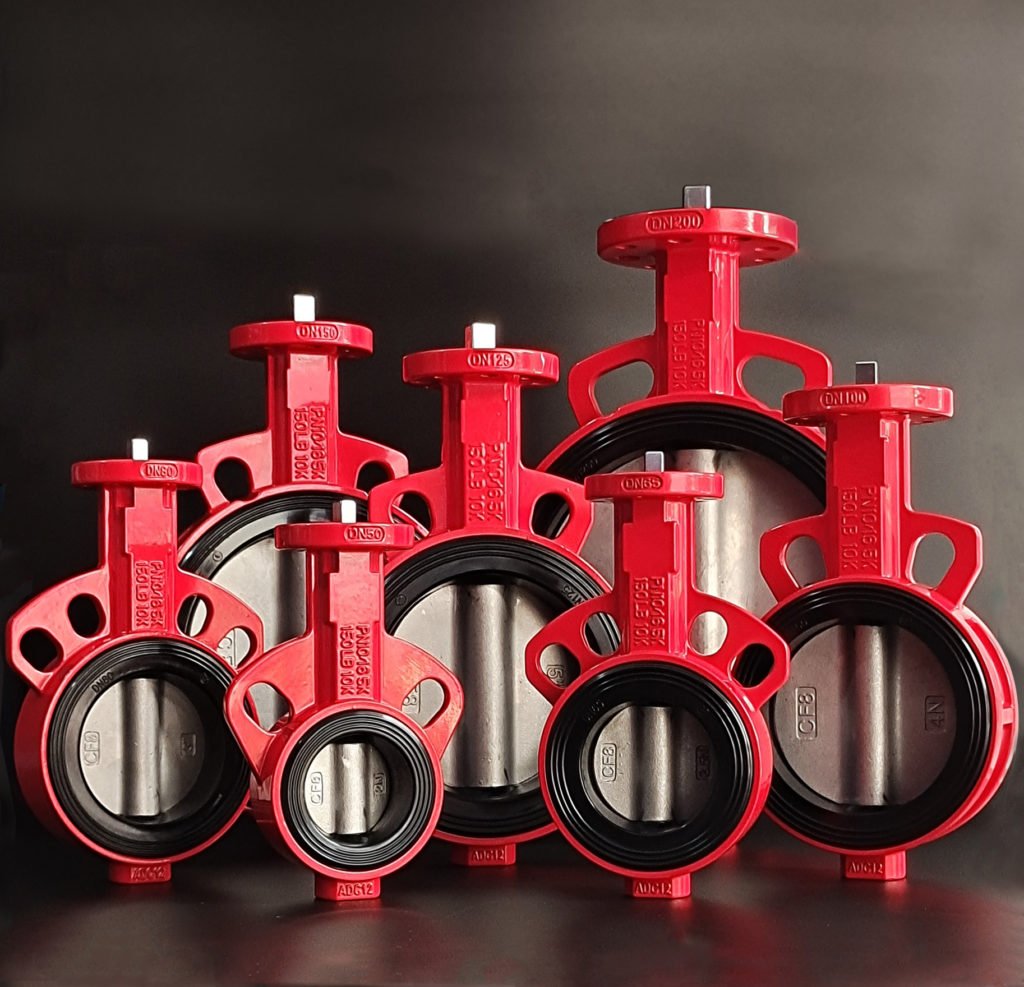
The characteristic of this valve is that the valve can be inspected and maintained on-line after the pressure of the device system is relieved under working conditions. During maintenance, it is only necessary to open the valve cover and lift out other accessories such as butterfly plate and elastic movement compensation valve seat for maintenance or replacement of accessories, without removing the whole valve from the pipeline. The valve can be reused to save energy.

two-way pressure butterfly valve Product features
The following discussion concerns a top-entry design, not every bidirectional butterfly valve. Before removing a cover or internal parts, follow the approved valve instructions and site isolation, depressurization, drainage and work-control procedure. A bidirectional rating alone does not establish top-entry construction or permission for in-line disassembly.
- Convenient maintenance: the large-diameter two-way pressure butterfly valve is of top mounted structure. When the valve needs maintenance, it is not necessary to remove it from the pipeline. Open the upper cover to take out the valve stem and butterfly plate from the body cavity, and take out the automatic compensation valve seat for maintenance. The switch is characterized by rapid, 90 ° reciprocating rotation and small driving torque. It is used to cut off, connect and regulate the medium in the pipeline. It has good fluid control characteristics and closing sealing performance.
- The butterfly plate of the large-diameter two-way pressure butterfly valve is of streamlined design, which makes the fluid resistance loss small, and the load surface of the inner cavity of the valve body is large, the flow resistance is small, and the fluid load surface is large; High compressive strength. The shaft sleeve of the valve rod is made of self-lubricating tin bronze, with small friction coefficient (< 0.16) and flexible opening and closing.
- The valve stem of large-diameter metal hard seal butterfly valve is of through rod structure. After special treatment, the valve stem has strong wear resistance, good comprehensive mechanical property, corrosion resistance and very high scratch resistance. When the top mounted butterfly valve is opened and closed, the valve stem only rotates without lifting and lowering. The packing of the valve stem is not easy to be damaged and the sealing is reliable. It is fixed with the conical pin of the butterfly plate, and the extended end is designed to prevent the valve rod from bursting out when the connection between the valve rod and the butterfly plate is accidentally broken.
- Particle wear resistance: the movement of the butterfly plate of the top mounted two-way sealing butterfly valve has the function of cleaning between the multi-level sealing ring with wiping performance and knife cut and the movable valve seat on the valve body, which is very effective to remove the granular crystals, dirt, fibers and other substances crystallized on the sealing surface of the movable valve seat; The movable valve seat sealing ring is made of high toughness and wear-resistant stainless steel, which has strong wear resistance and good comprehensive mechanical properties and corrosion resistance after special treatment. It is very scratch resistant. The butterfly plate sealing ring is made of soft and hard wear-resistant sealing plates, which has the double advantages of metal hard sealing and elastic sealing. It has two-way compression, reliable sealing and long service life. It has excellent sealing performance under low temperature and high temperature.
- Long service life and easy switching: effectively and reasonably reduce eccentricity, so the torque of the valve is greatly reduced; Identify the wear parts of the selected valve and their inspection or replacement requirements in the approved maintenance instructions. Due to the eccentric effect, the sealing surface of the butterfly plate and the movable valve seat are completely separated during the opening and closing of the valve. Confirm the operating torque and sealing-surface contact behavior for the selected valve and service; do not assume friction-free operation. The automatic compensation function of the valve greatly improves the service life of the valve, and the operation is light; Sealing surface of valve body; Surfacing stainless steel and cobalt based hard alloy are used, and the sealing surface is wear-resistant, high-temperature resistant and long service life.
- No friction on the switch: Based on the principle of three-dimensional eccentricity, the sealing surface of the butterfly plate moves towards the sealing surface of the valve body with the three-dimensional eccentricity displacement only at the moment after Zui. Under the effect of eccentricity, the sealing surface of the butterfly plate and the sealing surface of the valve body become more and more tight. Therefore, the sealing surface of the butterfly plate and the sealing surface of the valve body get very good close contact, achieving very good sealing effect and reliable sealing performance; When the valve is opened, the butterfly plate only needs to rotate by a small angle (2 ° ~ 3 °) under the action of eccentricity, and the sealing surface of the butterfly plate and the sealing surface of the valve body will be completely separated. The sealing surface of the butterfly plate and the sealing surface of the valve body will not have friction, and the service life of the valve is long.
- Automatic compensation of two-way pressure: when applying pressure from left to right, the butterfly plate and the valve body become tighter and tighter by using the principle of signal eccentricity, so as to obtain a good seal; When the pressure is applied from right to left as shown in the figure, when the automatic compensation valve seat is pushed by the pressure, the automatic compensation valve seat will automatically push against the butterfly plate. When the pressure is higher, the automatic compensation valve seat will push against the butterfly plate, so as to obtain a good seal; For a top-mounted bidirectional sealing butterfly valve, confirm the permitted pressure differential in each direction and the required leakage acceptance criteria, test medium and test conditions for the selected design; Under long-term use, if the automatic compensation valve seat seal and the butterfly plate seal are worn or damaged, the automatic compensation valve seat will automatically advance to the butterfly plate under the pressure. When the butterfly plate is pressed in the reverse direction, the automatic compensation valve seat will move forward under the pressure, thus obtaining a good automatic compensation function.
Selection catalogue of various butterfly valves
Frequently Asked Questions
Does two-way pressure capability mean I can remove either pipe flange?
Do not infer end-of-line capability from a bidirectional description. Request the documented pressure-direction and single-flange ratings, if required, and the approved bolting arrangement for the exact valve.
Can I service a top-entry valve while the pipeline is pressurized?
Do not interpret online-maintenance wording as permission to open a pressurized valve. Obtain the model-specific maintenance instructions and have the required isolation and work procedure approved for the actual installation.
What should I provide to confirm sealing in both pressure directions?
State the expected pressure conditions in each direction, medium, temperature and required shutoff performance. Request confirmation and applicable test evidence for the selected valve rather than relying on a general two-way description.