

Electric Stainless Steel 304 Lug Butterfly Valve
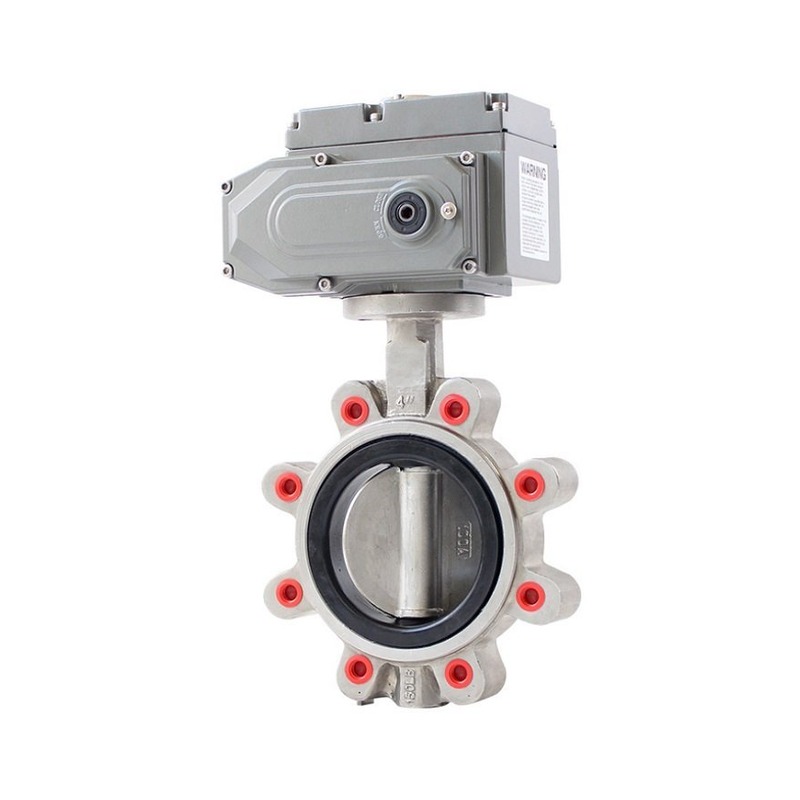
Electric Stainless Steel 304 Lug Butterfly Valve Specifications
The electric stainless steel 304 lug butterfly valve is a quarter-turn isolation valve with a lug-type body, stainless steel 304 (SUS304) wetted components and a motorised electric actuator for remote on-off or modulating duty in process water, HVAC, food-grade utility lines and light chemical circuits. Manufactured by Trekre & Fouten Valve at our Wuxi factory, this electric lug butterfly valve combines the compact face-to-face of a butterfly design with threaded lug connections that allow sectional removal of downstream piping without disturbing the upstream flange joint. The stainless steel 304 body and disc provide corrosion resistance in mildly aggressive media where cast iron or carbon steel would not meet the project specification, while the electric actuator supports direct integration with building management systems, PLC logic or SCADA panels without plant air infrastructure.
Compared with a manual lug butterfly valve on the same line size, the electric actuator delivers repeatable remote operation, position feedback and scheduled cycling where operators cannot access the valve wheel on every shift change. Compared with wafer-type electric butterfly valves, the lug body retains individual bolt paths through each lug ear so maintenance teams can isolate and remove downstream spools while the upstream companion flange remains bolted. Compared with double-flange electric butterfly valves on large headers, the lug pattern saves overall envelope length and suits mid-bore process branches, equipment isolation points and packaged skid boundaries where ANSI, DIN, JIS or EN flange drilling must match the mating pipe class.
Structure and working principle
The valve follows a centerline butterfly pattern with a disc rotating 90 degrees around a stem supported by internal bearings, a bottom bushing and a stem packing gland on the bonnet. Lug ears cast or machined into the valve body accept through-bolts that engage the companion flanges on each side of the installation. When the electric actuator receives an open or close command, the motor drives the stem through a gear train or direct quarter-turn output, turning the disc from parallel to perpendicular relative to the flow bore. At full closure the disc face compresses the resilient or PTFE seat ring to establish the primary seal boundary.
The top flange on the valve bonnet complies with ISO 5211, allowing standard electric actuators, handwheel overrides or future drive upgrades to mount without adapter plates beyond those specified on the datasheet. Stem seals typically combine V-ring or O-ring packing above the upper bearing to limit external leakage during thermal cycling. The lug connection geometry follows manufacturer tables for the selected flange standard so bolt circle diameter, lug thickness and bore length match the piping specification on the purchase order.
Electric actuators supplied with this valve class are sized against calculated breakaway and running torque for the stated differential pressure, seat material and valve size. On-off actuators use open/close limit switches to confirm end position. Modulating actuators accept 4–20 mA or 0–10 V control signals when the disc geometry and seat construction suit throttling duty within the stroke range defined on the project datasheet. Optional position transmitters, torque switches, heater kits for outdoor enclosures and local manual override handwheels can be included according to the instrument specification.
Nominal size and pressure class
Standard production covers nominal diameters from DN50 to DN600 (NPS 2 to 24) with intermediate sizes available on request. Pressure ratings commonly include EN PN10 and PN16, JIS 10K, and ANSI Class 150 lug configurations. Face-to-face dimensions follow manufacturer tables for lug butterfly valves or project-specific requirements when a non-standard length is mandated. Flange connection hole patterns can be supplied to United States ANSI B16.5, European EN 1092, German DIN, Japanese JIS and other regional standards as stated on the purchase order. Confirm companion flange rating, gasket type and bolt length before installation so the lug ears and through-bolts carry the design load without distortion.
Body, disc and seat materials
The primary pressure boundary uses stainless steel 304 (SUS304, CF8) for the body and disc when the project calls for general corrosion resistance in water, steam condensate, air and mild chemical contact. Stainless steel 316 (SUS316, CF8M) can be substituted when chloride exposure or higher pitting resistance is specified on the material requisition. Disc options include bare stainless steel, stainless steel with EPDM rubber lining bonded to the wetted face, PTFE or PFA fluoropolymer lining for more aggressive chemicals within the liner temperature limit, and nylon lining for selected abrasive slurry duties where the lining supplier confirms compatibility.
Seat materials commonly include EPDM for potable water, chilled water and HVAC loops; NBR for oil-bearing air or light hydrocarbon contact; PTFE for chemical service within the seat temperature range; and VITON (FKM) where higher temperature or selected solvent contact is defined on the datasheet. Seat selection must match the actual medium, operating temperature and cleaning procedure because elastomer and fluoropolymer limits are not interchangeable across products. Material certificates for body, disc and seat components can be included in the QA dossier when requested.
Sealing form and leakage performance
Primary sealing relies on compression between the disc face and the resilient or PTFE seat ring at full closure. Lug-type installation does not change the seat mechanics compared with wafer designs; the bolting arrangement only affects how the valve is held between companion flanges. Closure leakage is verified by seat test per the agreed project protocol and manufacturer test procedure. State the required leakage class or test medium in the purchase specification rather than assuming a universal rating across all sizes and seat materials.
Electric actuation and control options
Electric actuator form includes switch type for two-position isolation and adjustable (modulating) type for proportional flow control when valve construction supports throttling. Supply voltage options include DC24V, AC110V, AC220V and AC380V three-phase depending on actuator model and motor class. Control inputs for modulating duty typically accept 4–20 mA or 0–10 V analog signals. Opening and closing stroke times depend on actuator output speed, gear ratio and actual torque load during the stroke; specify required stroke time on the datasheet for factory verification.
Fail-safe behaviour on power loss—remain in last position, spring return to open or spring return to close—must be defined in the instrument specification because actuator models differ. Motor thermal protection, position indication on the local actuator cover and junction box entries for field wiring are configured according to the area classification and cable gland standard stated on the electrical drawing.
Applicable working conditions and industries
This electric stainless steel 304 lug butterfly valve is specified on process water branches, HVAC chilled and hot water loops, food and beverage utility lines where stainless wetted parts are required, pharmaceutical clean utility headers, light chemical transfer and equipment isolation skids. The lug connection suits applications where downstream piping must be removable for maintenance while upstream equipment remains connected. Electric operation fits remote valve stations, rooftop plant rooms and automated sequences where manual access is limited.
Standards, inspection and delivery
Design and inspection commonly reference EN 593, MSS SP-67, API 609 or GB/T 12238 depending on the project region. The valve body top flange complies with ISO 5211 for interchangeability with standard electric actuators. Each valve undergoes shell pressure test and seat closure check before shipment. Functional actuator tests, dimensional reports and material certificates can be included in the QA dossier when requested. Valves are cleaned, flange-faced protected and packed for export from Wuxi. Trekre & Fouten Valve engineers can review your medium composition, pressure-temperature profile, control signal type and flange standard to confirm body grade, seat selection and actuator class.
Product parameters
| Valve type | Electric stainless steel 304 lug butterfly valve |
| Structure | Lug type, centerline resilient or PTFE seated (as specified) |
| Size range | DN50 – DN600 (NPS 2 – 24); larger by quotation |
| Pressure rating | PN10, PN16; JIS 10K; ANSI Class 150 (as specified) |
| Body material | Stainless steel 304 (SUS304, CF8); 316 (SUS316, CF8M) optional |
| Disc material | SUS304, SUS316; rubber lined, PTFE lined or nylon lined (as specified) |
| Seat material | EPDM, NBR, PTFE, VITON (FKM) (as specified) |
| Connection | Lug type; flange hole standards DIN, JIS, ANSI, EN (as specified) |
| Operation | Electric actuator; on-off or modulating (4–20 mA / 0–10 V) |
| Supply voltage | DC24V, AC110V, AC220V, AC380V (as specified) |
| Top flange | ISO 5211 actuator mounting |
| Design standard | EN 593, MSS SP-67, API 609, GB/T 12238 (as agreed) |
| Test | Shell and seat test per project specification |
Selection notes
Specify flange standard and pressure class, body and seat material, operating temperature and medium composition, available supply voltage, control signal and required stroke time. Confirm whether the duty is strict isolation or includes modulating throttling so the correct seat and actuator type are paired. State enclosure rating and area classification for the actuator and junction box. Allow clearance for actuator height, handwheel override access and maintenance space around both lug bolt circles.
Installation and maintenance guidance
Install the lug valve between companion flanges with gaskets suited to the medium and flange class. Tighten through-bolts in a cross pattern so lug ears load evenly without bending the body. Mount the electric actuator within orientation limits on the nameplate. Wire the actuator through the project MCC or local starter according to the electrical schematic. During commissioning, verify limit switch or transmitter feedback matches physical disc position through several open-close cycles under line pressure. Periodically inspect seat contact, stem packing and actuator heater operation in outdoor installations. Replace packing when external leakage appears during thermal cycling.
Comparison with adjacent designs
Manual lug butterfly valves on stainless steel 304 bodies suit local operation but cannot support remote sequences. Wafer-type electric butterfly valves save length but do not offer the same downstream removal convenience through individual lug bolting. Pneumatic lug butterfly valves deliver faster stroke when plant air is available but require separate air treatment and may not suit sites without compressed air infrastructure. Double-flange electric butterfly valves address large header loads where lug patterns are not specified. The electric stainless steel 304 lug butterfly valve fits mid-bore process branches where stainless wetted parts, lug installation flexibility and motorised remote operation are all required on the same valve tag.
This electric stainless steel 304 lug butterfly valve extends the Trekre & Fouten electric butterfly valve range for plant owners who need motorised isolation on stainless lug connections with configurable seat materials and actuator control options. Contact our sales team with flange details, medium data, voltage requirement and control signal type for quotation and delivery schedule from our China valve manufacturing facility.