
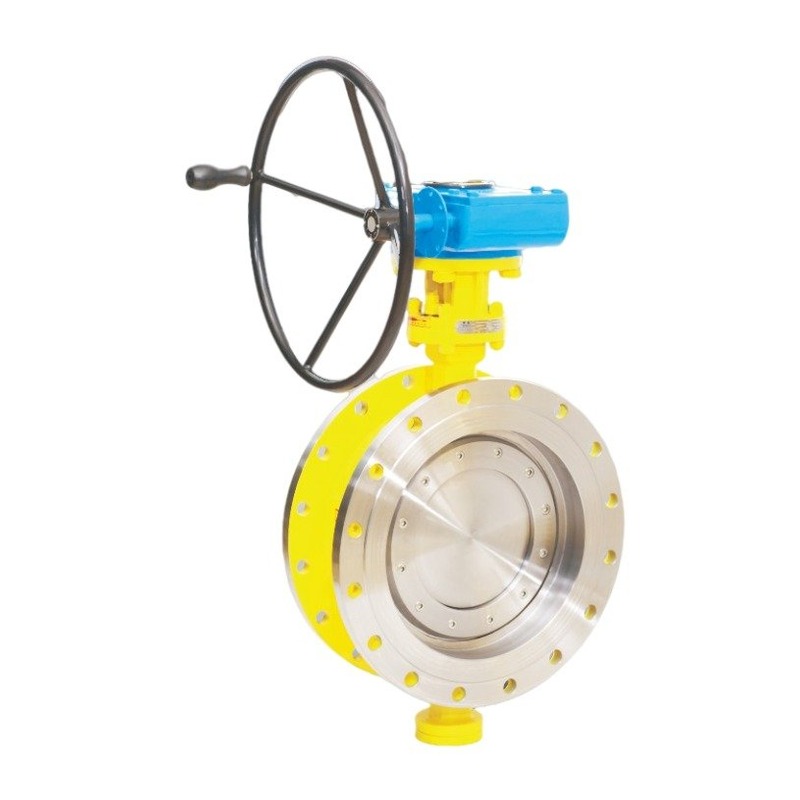

The German standard metal hard seal flange butterfly valve is a triple-offset quarter-turn valve built for DIN EN 593 style piping where compact face-to-face length, flange-end restraint, and metal seated shutoff on elevated temperature or abrasive media are specified together. Trekre Valve supplies this triple eccentric flange butterfly valve with carbon steel or stainless steel bodies, multi-layer metal and soft-compatible seat rings, and an ISO 5211 actuator mounting pad so worm gear, pneumatic, or electric packages can be added after the bare-stem body is set in the line. Fouten Valve engineering teams size the disc, seat overlay, and stem packing from the stated medium, pressure class, and temperature band before release to production.
Table of Contents
Triple offset sealing geometry
Triple-offset butterfly valves add a third angular offset to the disc sealing cone so the disc leaves the seat quickly on opening and contacts the seat ring only in the final closing degrees. That motion reduces sliding wear on metal seats compared with concentric or single-offset designs and supports tighter shutoff on steam, thermal oil, and erosive slurries when the seat material and body alloy match the loop chemistry. The first offset places the stem axis behind the disc center; the second shifts the stem off the pipe center line; the third tilts the sealing cone relative to the bore axis so contact is line-based rather than a full-face wipe.
On this German standard metal hard seal flange butterfly valve, the triple eccentric form is paired with a seat ring that can combine hard metal layers with resilient backup layers where the project specification calls for hybrid soft-hard sealing. Shutoff class and allowable leakage follow the test method named on the purchase order; confirm results on the factory or witness test report rather than assuming a generic verbal rating. For mixed-flow headers, confirm the selected valve shutoff rating in each pressure direction, including permitted differential pressure and agreed test conditions.
DIN EN 593 flange body and connection
Flange-end bodies install directly between companion flanges on PN16 and PN25 class lines common in European water, district energy, and process utility networks. Face-to-face dimensions and flange drilling follow DIN EN 593 and related EN 1092 mating flange practices as ordered, so integrators should verify gasket type, bolt length, and flange facing against the approved valve drawing before tightening. Unlike wafer bodies, double-flanged triple-offset valves carry end loads through their own flanges, which helps on larger nominal sizes and vertical runs where pipeline weight must not rest on a short wafer shell alone.
Clamp-type triple-offset variants appear in some DIN product families for space-limited retrofits; this flange series is intended for full bolted flange assemblies on new build and replacement projects. Confirm whether the line uses PN16 or PN25 drilling, raised face or flat face mates, and any insulation or jacket clearance around the valve neck before finalizing the bill of materials.
Metal hard seal and multi-layer seat rings
Metal seated triple-offset valves use stainless or overlay-finished seat rings that resist oxidation and erosion on hot gas, steam condensate, and mineral-bearing water. Multi-layer seat constructions can include a hard sealing surface backed by softer layers that absorb minor deflection without breaking contact pressure on the sealing line. That arrangement supports long cycle life on frequently operated isolation points when differential pressure and disc velocity stay within the agreed data sheet limits.
Do not interchange seat assemblies between double-offset and triple-offset valves on the same tag number; offset geometry, torque, and test documents differ. When media carries fine solids, review flushing procedures and whether a downstream strainer is required so seat scoring does not accelerate during the first weeks of service.
Bare stem, ISO 5211 pad, and drive options
The valve is commonly supplied as a bare-stem body with a square or keyed stem top and an ISO 5211 mounting flange sized for the nominal bore range. Worm gear operators suit local hand operation on larger sizes; pneumatic actuators suit fast cycling and remote solenoid control; electric actuators suit modulating or on-off signals from plant DCS networks. Actuator torque must be calculated from break torque, seat friction, and safety factor at the stated differential pressure, not from a generic table alone.
Extension stems, chain wheels, and buried-service packages are separate assemblies; if the valve sits in a chamber or deep vault, state operator elevation and maintenance access on the inquiry so stem length and guide supports are quoted consistently with the triple-offset flange body.
Materials, sizes, and pressure temperature limits
Body castings are offered in WCB carbon steel for general industrial duty and CF8 or CF8M stainless steel when corrosion resistance or higher temperature oxidation limits are specified. Disc and seat materials are selected to match the medium: stainless disc with Stellite or equivalent overlay seats for erosive steam and condensate, or alternate alloys when the chemical compatibility sheet requires them. Nominal size coverage commonly spans 2 inch through 48 inch and larger on engineered orders, with PN16 and PN25 pressure designations per EN practice and Class 150 equivalents where projects dual-specify ANSI mates.
Temperature limits depend on seat overlay, packing set, and body alloy; state design temperature on every requisition so graphite or PTFE packing systems are not mixed incorrectly. Coating systems on carbon steel bodies may include epoxy or polyurethane finishes suitable for outdoor valve yards and coastal humidity when named on the order.
Typical applications
German standard triple offset flange butterfly valves serve isolation and shutoff on district heating mains, boiler feed headers, refinery utility lines, metallurgical gas manifolds, pulp mill white-water systems, and municipal water transmission where EN flange standards dominate the piping specification. They fit pump isolation, heat exchanger bypass legs, and equipment maintenance valves when metal seated shutoff and triple-offset geometry are required together.
They are not a substitute for fully lined butterfly valves on strong oxidizers or hydrofluoric acid services, nor for cryogenic extended bonnet designs on deep cold LNG duty without a separate engineering review. When leakage targets are very low on clean water at ambient temperature, a resilient seated wafer valve may be more economical if pressure and temperature stay within that design envelope.
Installation, storage, and maintenance
Install the valve with the disc slightly open during flange bolt-up, then tighten bolts in a cross pattern so gasket load is even and the body is not twisted. Support adjacent heavy piping so flange loads stay within the valve rating. After hydrotest, exercise the valve fully open and closed while checking packing for weeping; adjust the gland evenly if needed. Store indoors with the disc off the seat, protect machined flanges from impact, and keep stem threads clean if actuators will be mounted later.
Periodic operation on infrequently used lines helps prevent packing consolidation and scale buildup that increases break torque. Record as-found torque if actuators are retrofitted so the drive size can be verified against actual field conditions.
Product parameters
| Item | Specification |
|---|---|
| Model | German standard triple offset flange butterfly valve (metal hard seal) |
| Structure | Triple eccentric disc, double flanged body |
| Connection | Flanged PN16 / PN25 per DIN EN 593; EN 1092 mates as ordered |
| Size range | 2" – 48" (DN50 – DN1200; confirm for project class) |
| Pressure class | PN16, PN25; Class 150 equivalent where specified |
| Body material | Carbon steel WCB or stainless CF8 / CF8M |
| Seat seal | Metal hard seal; multi-layer soft-hard compatible seat optional |
| Operation | Bare stem with ISO 5211 pad; worm gear, pneumatic, or electric drive as ordered |
| Design standard | DIN EN 593; related EN flange practices as agreed |
| Test | Shell and seat test per order; leakage per agreed standard and test report |
Selection questions
When should I specify DIN EN 593 triple offset flange valves instead of API 609 Class designs?
Use DIN EN 593 triple offset flange valves when the piping bill of materials, flange drilling, and inspection documents follow European EN standards end to end. API 609 or ANSI-centric valves may still meet performance needs, but mixed documentation can complicate site acceptance; align the valve standard with the flange and gasket specification on the drawing.
Can one metal seat configuration cover both PN16 and PN25 duties on the same RFQ?
PN16 and PN25 bodies, seat widths, and test pressures are not interchangeable without a new rating calculation. State the required PN class, design pressure, and temperature on the inquiry so the factory quotes one consistent pressure-temperature table.
What should I send to a China valve manufacturer for a German standard triple offset flange butterfly valve quote?
Include medium, design temperature, design pressure, nominal size, flange standard and PN class, body and seat material preferences, actuator type or ISO 5211 bare stem, quantity, required test certificates, and any coating or corrosion allowance. Attach a flange detail or isometric so face-to-face and bolt circle dimensions are verified before production.
Parameter tables list common optional ranges for discussion. Final dimensions, materials, pressure-temperature limits, and test results follow the Trekre or Fouten Valve technical agreement, nameplate marking, and factory test report for the supplied tag.