
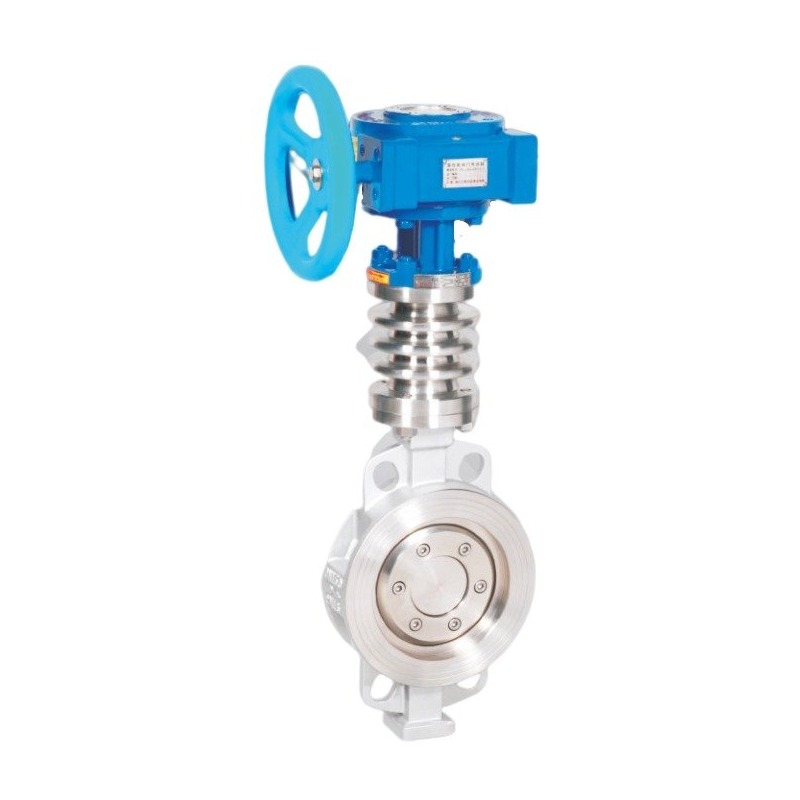

The ripple insulation cover high temperature wafer butterfly valve is a quarter-turn isolation valve for hot pipelines where a standard soft-seated wafer body would transfer too much heat toward the stem, packing, and operator. Trekre Valve builds this high temperature wafer butterfly valve with a folded metal ripple shield above the body, a laminated flexible seal on the disc edge, and worm gear handwheel operation for refinery branches, steam distribution headers, metallurgical cooling circuits, and chemical hot-fluid manifolds. The wafer format installs between companion flanges with through bolts, keeping face-to-face length short on retrofit work in crowded pipe racks.
Table of Contents
Ripple insulation cover and thermal shielding
Hot process lines conduct heat into the valve bonnet and upper stem zone. On a conventional wafer butterfly valve, elevated bonnet temperature can harden packing, increase handwheel torque, and shorten grease life in a worm gear box. The ripple insulation cover on this high temperature wafer butterfly valve uses a folded stainless steel profile to create stand-off distance and an air gap between the hot body and the operator side. Radiant and conductive paths toward the handwheel are reduced compared with an exposed bonnet on the same line condition, which supports safer local operation when site rules require hot-surface controls and appropriate PPE.
The cover is a removable assembly for inspection of gland bolts and stem packing during planned outages. It does not replace a full personnel-protection program: surface temperatures on the shield and handwheel must still be verified for each installation. Trekre documents envelope height with the cover installed so piping designers can confirm clearance under cable trays, platforms, and adjacent equipment on vertical and horizontal runs.
Multi-layer laminated seal on the disc
The disc carries a multi-layer soft folded sealing element retained on the valve plate. During opening, the laminate flexes so the seal lifts away with lower friction than a single heavy elastomer ring that wipes the seat through much of the stroke. Near the closed position, additional stem torque increases contact pressure at the seat land, helping compensate for thermal expansion differences between disc and body on steam, hot water, and thermal oil duties within the rated band for the selected laminate and body materials.
This sealing approach targets bubble-tight shutoff on hot utility and process media where wafer installation and moderate actuation torque matter. It differs from triple-offset metal hard-seated flanged valves intended for the highest dry-gas temperature and pressure combinations. Closure leakage acceptance follows the test protocol named on the purchase order; Trekre does not state a universal leakage class in place of that agreed documentation.
Wafer body and connection
The valve installs between two pipeline flanges using through bolts that pass outside the short wafer body. Gaskets on both sides compress the body between flanges; bolt length and flange finish must match the pipeline standard on the project. Common pairings include raised-face flanges per ASME B16.5, EN 1092 PN tables, and JIS B2220 where the purchase order specifies them. Confirm the applicable face-to-face standard, category and dimensions against the purchase specification and approved valve drawing before ordering.
Compared with double-flanged high temperature butterfly valves, the wafer ripple insulation cover high temperature wafer butterfly valve reduces weight and axial length, which helps when inserting an isolation point between existing flanges without cutting in a spool piece. Compared with uninsulated wafer valves on the same hot line, the ripple shield addresses operator-side heat exposure while retaining the same between-flange footprint class.
Worm gear operation
Standard supply includes a worm-and-gear operator with handwheel, position indication, and self-locking drive under normal differential loading. Gear ratio selection balances handwheel turns against stem torque at rated pressure and temperature. The top flange on applicable sizes follows ISO 5211 dimensions so a pneumatic or electric actuator can replace the gearbox later when automation is added, subject to torque review and clearance under the ripple cover.
Operators should exercise seldom-used valves on hot standby lines to limit deposit buildup on the seat track. Rising handwheel torque after months of service often indicates seat wear, solids on the seal line, or packing adjustment need rather than gearbox failure alone.
Body materials, sizes, and pressure class
Pressure-containing bodies are commonly supplied in carbon steel WCB, stainless steel CF8 (304) or CF8M (316), and alloy grades such as WC6 or WC9 when the data sheet requires them. Nominal sizes from DN50 to DN2000 (NPS 2 to 80) appear on project lists; confirm availability and lead time for extreme diameters at quotation. Pressure classes typically include PN10, PN16, and PN25, with Class 150 and Class 300 wafer ratings where the flange specification demands them. Operating temperature limits depend on body alloy, laminate materials, and packing selection—provide minimum and maximum process temperature when requesting a quotation.
Typical applications
Specify this ripple insulation cover high temperature wafer butterfly valve on steam branch isolation, condensate manifolds, hot oil and heat-transfer fluid loops, refinery utility headers, metallurgical furnace cooling water returns, power-plant auxiliary steam ties, and chemical reactor vent branches where wafer retrofit and thermal protection of the operator zone are both required. Media should be compatible with the laminated seal and body materials; abrasive slurry or high-velocity cavitation service needs application review before finalizing a soft-sealed wafer design.
Installation and maintenance
Install with the disc slightly open to protect the laminated seal during flange bolt tightening. Tighten through bolts in a cross pattern so both flanges close parallel to the wafer faces. Select gaskets for temperature and chemical duty. Orient the valve so the ripple cover and handwheel remain accessible and do not clash with insulation on adjacent piping. After the first hot cycle, inspect stem packing and adjust the gland within the manufacturer torque band if needed. Lubricate the worm gear per the maintenance sheet supplied with the valve. Replace laminate seal components during planned shutdown when closure leakage exceeds the allowance in the operating procedure.
Product parameters
| Valve type | Ripple insulation cover high temperature wafer butterfly valve |
| Structure | Wafer (clamp) body with ripple metal thermal shield |
| Size range | DN50 – DN2000 (NPS 2 – 80), confirm large sizes at order |
| Pressure rating | PN10, PN16, PN25; Class 150 / 300 (as specified) |
| Body material | WCB, CF8, CF8M, WC6, WC9 (as specified) |
| Disc / seal | Stainless disc with multi-layer laminated flexible seal |
| Operation | Worm gear handwheel; ISO 5211 pad for actuator retrofit |
| Temperature | Per body and seal selection; confirm on data sheet |
| Standards | API 609, MSS SP-67, EN 593, GB/T 12238 (as agreed) |
| Test | Shell and seat test per project specification |
Selection questions
How is the ripple cover different from a plain bonnet on a hot line?
The folded shield adds stand-off and an air gap to slow heat transfer toward the packing and gearbox. It supports lower operator-side temperatures than an unshielded bonnet on similar duty, but site teams must still measure surface temperatures and follow their hot-work and access rules.
Can I automate this valve later?
Many sizes include an ISO 5211 top interface. Provide required torque, fail-safe direction, and clearance under the ripple cover when planning pneumatic or electric actuators. Trekre Valve can quote a complete operated assembly or a bare valve prepared for a nominated actuator vendor.
What should I send for a quotation?
Include nominal size, flange standard and pressure class, medium composition, minimum and maximum temperature, operation type, and any inspection or documentation requirements. Our engineers will confirm body alloy, laminate seal suitability, and delivery schedule from the Wuxi manufacturing facility.