

Fluorine lined diaphragm valve is a special type of valve with cut-off function. Its opening and closing parts are composed of steel valve disc and diaphragm made of soft material (rubber and fluoroplastic composite), and the inner cavity of the valve body is connected with the valve cover. The lumen is separated to achieve the purpose of cutting off the medium in the tube.
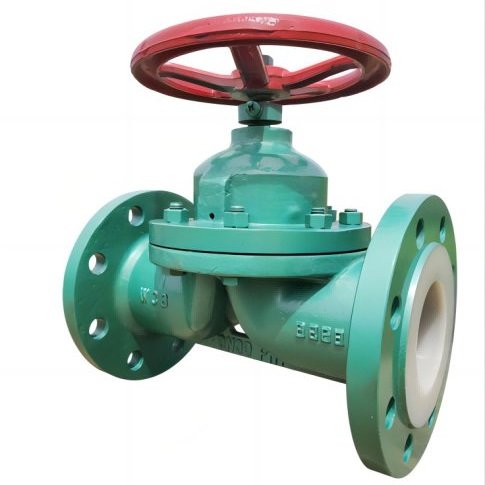
- The composite diaphragm separates the inner cavity of the lower part of the valve body from the inner cavity of the bonnet, and forms a direct-flow channel with it, so that the internal parts such as the valve stem and disc on the upper part of the diaphragm are completely isolated from the medium, and the packing sealing structure is omitted. Confirm the required shutoff performance and external sealing requirements for the selected valve assembly and operating conditions; the diaphragm arrangement alone does not establish a leakage guarantee.
- The page describes diaphragms made with PFA or PCTFE and synthetic rubber, with fluoroplastic linings. Confirm compatibility of the complete selected assembly with the actual medium and operating conditions rather than assuming suitability for corrosive service from the material names alone. Do not use the stated constructions for molten alkali metals or elemental fluorine.
- The diaphragm as the actuator is prone to fatigue fracture due to frequent opening and closing, and should be replaced regularly according to the working conditions and medium characteristics.
Frequently Asked Questions
Should I specify PFA or PCTFE for my diaphragm-valve inquiry?
Provide the chemical composition, concentration, operating conditions and cleaning requirements. Request confirmation of the actual diaphragm, lining and other wetted materials for the selected valve rather than treating the two material names as interchangeable.
How do I find the correct replacement diaphragm?
Provide the valve identification, size and existing diaphragm details and ask for the part and revision approved for that valve. Confirm the composite construction and service requirements before ordering a replacement.
How often will the diaphragm need replacement?
Request the selected valve’s maintenance guidance and provide the medium, operating conditions and cycling duty. Do not infer a fixed replacement interval from the general diaphragm-valve description.