
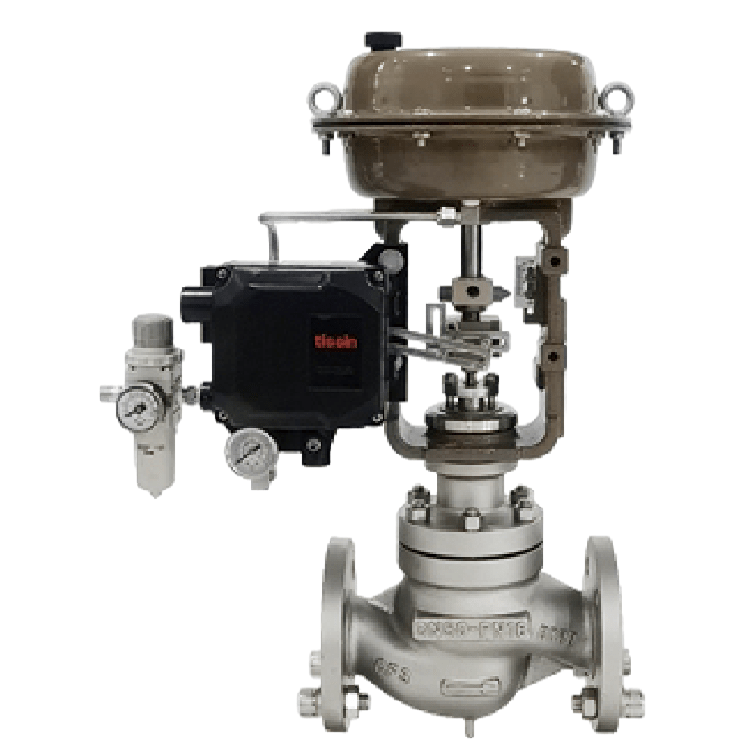

Product Overview
In a cage-regulating arrangement, movement of the closure element changes the available flow area in the trim. The selected cage and plug determine the usable flow characteristic and capacity. A stainless-steel version should be chosen from the full wetted-material specification and process conditions, not from the body-material name alone.
Selection and Ordering Notes
- Provide minimum, normal and maximum flow with inlet and outlet pressure and temperature for each case.
- Identify the medium, contaminants and required 304 stainless-steel configuration.
- Confirm the cage, plug, seat, stem and packing materials separately.
- Specify air supply, control and feedback interfaces, failure response and mating flange dimensions.
Related information: Review control-valve configurations | Compare the carbon-steel cage version | Valve technical guidance | About Trekre.
Frequently Asked Questions
Is this the stainless-steel alternative to the carbon-steel cage valve?
Yes. The material distinction confirmed for this page is 304 stainless steel; the related 1196 page is the carbon-steel version. Confirm the selected body and trim specification in the quotation.
Does a 304 stainless-steel version mean every wetted part is 304?
No. Ask for the actual cage, plug, seat, stem, packing and seal materials. Process compatibility depends on the complete wetted arrangement, not a single material label.
What do you need to confirm that the cage trim will control my flow?
Submit the operating flow cases, fluid properties and inlet and outlet conditions. Request the selected trim's sizing and flow-characteristic information rather than assuming a capacity from the pipe size.