
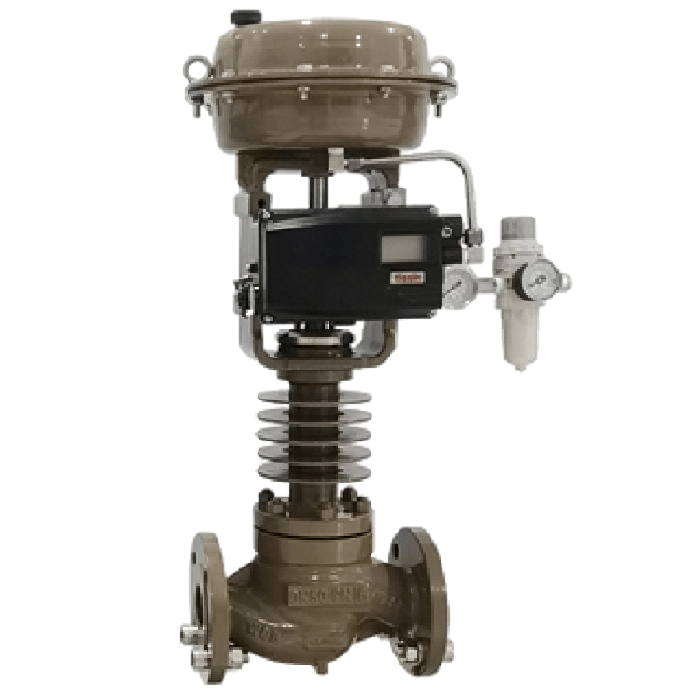

Product Overview
A heat-dissipation arrangement addresses heat transfer toward the stem-sealing and operating assembly. It must not be confused with a bellows seal, which is a separate sealing feature. The actual bonnet construction, thermal clearances and insulation instructions should be checked on the approved drawing for the intended duty.
Selection and Ordering Notes
- Provide design and operating temperatures, pressure, medium and all control flow cases.
- Request the selected heat-dissipation structure, packing and complete assembly rating.
- Show insulation boundaries and available bonnet, actuator and maintenance space.
- Confirm the actual trim, shutoff requirement, pneumatic controls and connection dimensions.
Related information: Compare regulating-valve arrangements | Valve technical guidance | About Trekre.
Frequently Asked Questions
Do the heat-dissipation fins give this valve a fixed maximum temperature?
No numerical limit should be inferred from the fins. Request the approved temperature and pressure limits of the complete selected assembly, including its packing, seals and actuator arrangement.
Does the corrugated heat-dissipation section mean the valve has a bellows seal?
Not necessarily. Heat dissipation and bellows sealing serve different purposes. If a bellows seal is required, specify it separately and request a drawing identifying the actual sealing arrangement.
What should I show on the installation drawing for the high-temperature version?
Include pipe insulation, available height, actuator clearance and maintenance access. Obtain the selected model's insulation and installation instructions rather than assuming the thermal section may be covered.