


The electric three-way regulating valve is often used for the regulation of two media in heat exchangers. One can be used instead of two single- and double-seat regulating valves. It can also save installation pipelines, save investment, and occupy a small space. Powered by the power supply, it accepts a unified signal of 0-10mADC or 4-20mADc to drive the valve opening corresponding to this operating signal, so as to adjust the working parameters such as pressure, flow, liquid level and temperature.
Electric 3-way regulating valve
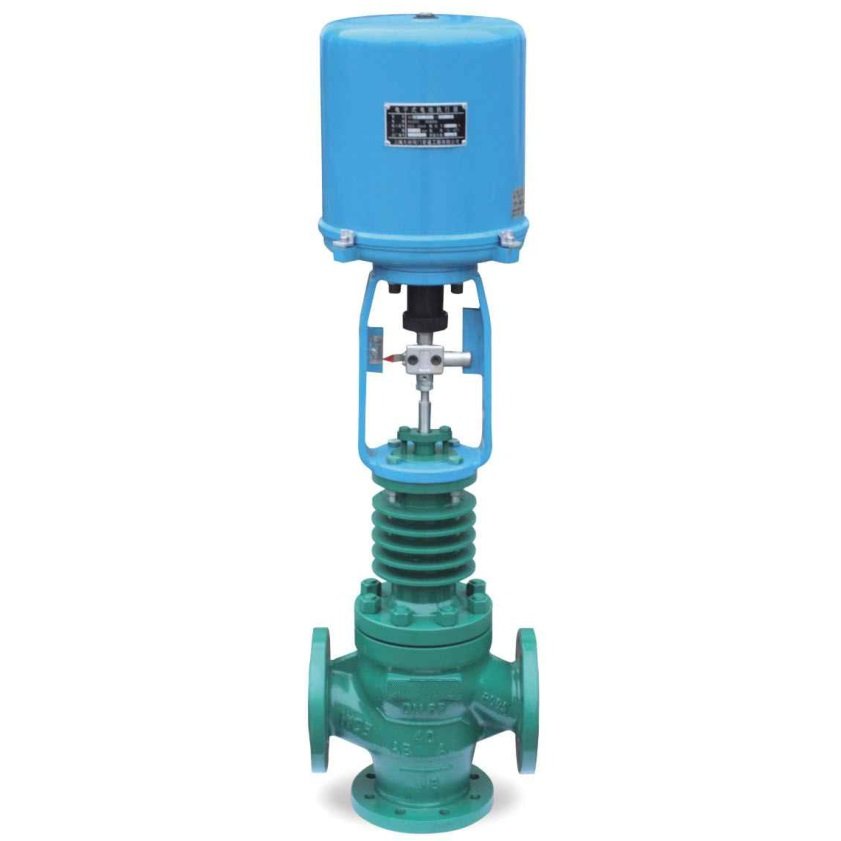
Electric three-way regulating valve
The valve body of the electric three-control valve is a three-way structure, that is, one in and two outs (split type), two in and one out (confluence type), and the confluence (mixing) arrangement combines two inlet streams into one outlet stream. Confirm the required port arrangement and flow diagram for the selected valve. The split type is to divide a fluid into two fluids.
This product is a three-way regulating valve with electric actuation. The current page identifies a three-way double-seat spool and describes diverter and confluence arrangements. Confirm the required flow arrangement, materials, connection and actuator control requirement before ordering.
Product Overview
The current product data describes a three-way valve body, a three-way double-seat spool and flanged end-connection options. It is presented as an electric regulating configuration; the selected duty and final control arrangement must match the application.
Selection Notes
Confirm whether the application requires diverter or confluence duty, then specify the medium, pressure and temperature conditions, size, flange compatibility, materials, required control duty, power supply and input-signal requirement before ordering.
FAQ
What three-way duty should be specified?
State whether the valve is required for diverter or confluence duty and provide the actual piping and flow arrangement for review.
What connection information is needed?
Provide the required flange and mating-piping details together with the applicable project requirement.
What electric control information is required?
State the required control duty and the intended control-interface requirement so the actuator configuration can be confirmed.